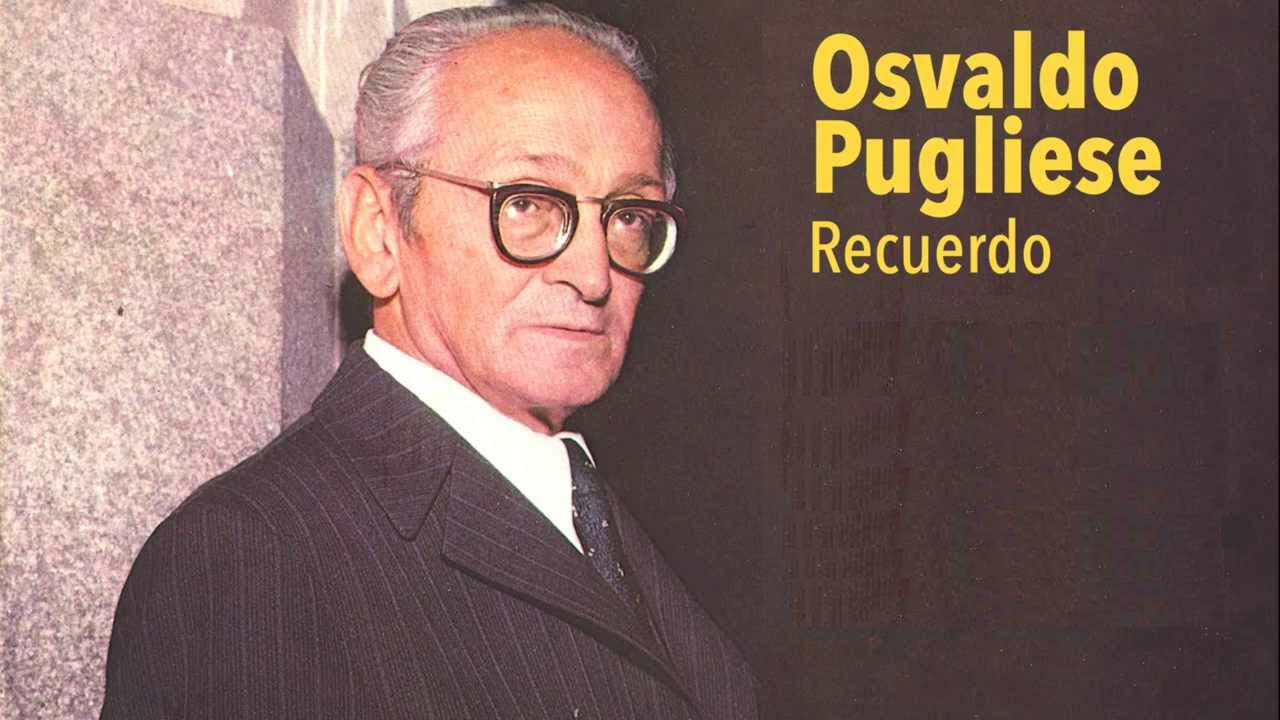
This week's tanda is a beautiful, dramatic instrumental set by Osvaldo Pugliese.
The first song of this set, "Recuerdo" is considered by many a turning point in the composition of Argentine Tango music. It was composed in 1924 and has a complexity that had not been seen before. There is some debate over who the composer was. It was originally registered by Adolfo Pugliese, Osvaldo Pugliese's father, but Osvaldo said that he gave it to his father to register because his father was having a hard time financially. Apparently, it was later re-registered under Osvaldo's name. Some also say that it belongs to Osvaldo's brother, who left the composition behind after moving away. I would go with Osvaldo's story, since the music sounds so similar to his other compositions. If it was Osvaldo's composition, then he wrote it at the age of 19.
The title means "memory" and the original title was "Recuerdo para mis amigos (Memory of my friends)." Pugliese said that he wrote it in honor of his friends who used to meet at a café called La Cueva del Chancho (The Pig's Cave).
And the other songs in this tanda are just as strong with Pugliese's characteristic flow of melodic tenderness marked with strong punctuations of rhythm.
Great version of this tango by Osvaldo Pugliese with Roberto Chanel. The title is "The men are forming the circle (la ronda)." La ronda refers to the dance floor or line of dance.
The original title was "Muchachos se armó la milonga," which uses lunfardo (street slang of Buenos Aires), but the title was changed along with many other tangos in 1943, because of "le ley seca (the dry law)" a policy by the ruling military and the Catholic church to "purify" the language of Argentina. They also wanted to protect the youth from the corrupting influence of tango.
Other examples of famous tangos with name changes are:
Old Title
Revised Title
Muchachos se armó la milonga
Muchachos Comienza La Ronda
Shusheta
El Aristocrata
Chique
El Elegante
La Maleva
La Mala
Milonguero Viejo
Balarín Antiguo
Concha Sucia
Cara Sucia
La concha de la lora
La cara de la luna
El Once
A Divertirse
Raza Criolla
El Taita
Mí Pebeta
Mé Nena
Con Los Amigos
A Mí Madre
Rique
Olvídame
Rosa Morena
Abuelita Dominga
Marquita
Marcheta
Condena
S.O.S.
Metido
Enamorado
Comparsa Criolla*
Comme il faut
El Morocho y El Oriental**
Gardel-Razzano
* This tango was composed by Rafael Iriarte and Eduardo Arolas. They both registered the song separately under different names, Iriarte "Comparsa Criolla" and Arolas "Comme il Faut."
** It is hard to tell if "Gardel-Razzano" is a true second title or just a subtitle or there for clarification. Carlos Gardel’s nickname was “El Morocho del Albasto (The dark haired boy of the Albasto district)” and José Razzano’s nickname was “El Oriental (person from the Eastern bank of the Rio de la Plata or Uruguayan)” The nicknames could have been considered inapproriate slang and so the song could have been renamed in the 1940s.
"Shusheta" which was changed to "El Aristocrata" and "Chique" was changed to "El Elegante." The best translation that I found for chique is that in lunfardo it meant to be fake. Susheta was similar in that it meant to be a backstabber or someone who would rat you out. "La Maleva (The Bad Girl)", meant bad as in evil or criminal, but was simplified to "La Mala", which was just bad. "Milonguero Viejo" was changed to "Balarín Antiguo."
I think most went back to their original names after 1947 or 1948.
Words in the lyrics were also changed, "vieja" meant "old lady" but was often changed to madre or madrecita, which were less disrespectful. Pibeta became muchacha.
I have also read that there was some censorship and name changes after the coup of General Uriburu in 1930.
Some song titles and lyrics were changed because the originals were so vulgar. "Concha Sucia" was a traditional song believed to have been composed by 'El Negro' Casimiro Alcorta, a black violin player from the earliest days of tango. The title literally translates to "Dirty Shell," but concha (shell) was a common, obscene term for vagina. Canaro registered this tango, under his own name, and changed the song title to "Cara Sucia" in 1916. Canaro is believed to have done this with several of the old tangos. The name change was probably to conform to the changing audience of tango, which was including more women and the middle class.
"La cara de la luna" was originally "La concha de la lora." Lora was lunfardo for parrot, which meant a prostitute from Europe.
This week's traditional tanda is a dramatic set by Osvaldo Pugliese. This set features Recuerdo, the first tango Pugliese composed, in 1924, when he was only 19 years old. The title was originally "Recuerdo para mis amigos" (Memory for my friends) and was an homage to his friends that he used to hang out with in the cafe. This song is often described as a milestone of tango composition for its melodic structure and its complex density. "Recuerdo" shows Pugliese's knowledge of European classical music and his commitment to the streets of Buenos Aires.
"One could speak, with total justice, of compositions before and after Pugliese's 'Recuerdo' and the instrumentalists before and after 'Recuerdo'." - Horacio Ferrer.
This week's tanda is one of my favorite tandas to dance to by Osvaldo Pugliese. It has everything that makes Pugliese great. These songs are bold but tender, calm and then energetic. To enjoy dancing to his music, you have to be able to enjoy the silence. It is about the moments between the steps. Many believe that you have to have a large vocabulary to dance to Pugliese, but actually I probably do less when dancing to his music. It is about patience, balance and the connection to your partner.
Wonderful interpretation of Malandraca by Beba Pugliese with her dad watching... I love when she speeds it up at 1.05... you can really hear the jazz/African influence.
Most of the best dances of my life have been to Pugliese.
To dance to Pugliese, you need exceptional balance, patience and discipline (by both partners). It takes the ability to respect the silence and the moments between the steps. To dance Pugliese is to dance tango.. not to execute steps. Pugliese takes time to master. Don't be afraid of him though.. find freedom in those pauses. The big problem I think for most with Pugliese is that it requires a perfect mixture of exceptional technique and heart. One without the other will not suffice...
Pugliese is considered, by most accomplished dancers, to be a wonderful orchestra for dancing. You will hear plenty of Pugliese at the Milongas in Buenos Aires and you will see the best dancers head to the floor when they hear the first notes. That is when they find their favorite partners.
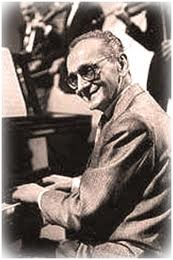
Osvaldo Pedro Pugliese (Buenos Aires, December 2, 1905 – July 25, 1995) was an orchestra leader, composer and pianist.
He was known for his dramatic and passionate arrangements while still keeping the strong walking beat of salon tango. His music walked a fine line between the dance hall and concert hall. The greatest musicians of the time wanted to work with Pugliese.
One could speak, with total justice, of compositions before and after Pugliese's "Recuerdo" and the instrumentalists before and after "Recuerdo." - Horacio Ferrer
He composed his first tango "Recuerdo" in 1924 when he was only 19 years old. The title was originally "Recuerdo para mis amigos" (Memory for my friends) and was an homage to his friends that he used to hang out with in the cafe. This song is often described as a milestone of tango composition for its melodic structure and its complex density. "Recuerdo" shows Pugliese's knowledge of European classical music and his commitment to the streets of Buenos Aires, as de Caro had previously. It is no wonder that de Caro was the first orchestra to record the song.
Pugliese is often played later in the evening when the dancers want to dance more slowly, impressionistically and intimately. While being able to dance well to Pugliese's music is the mark of a truly accomplished dancer, his music is very challenging for new dancers.
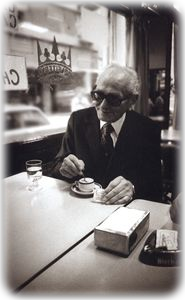
Pugliese was outspoken in his political opinions and was a communist. These sympathies often brought him into conflict with the government and police. His orchestra was banned from being played on the radio on several occasions. In 1955, Perón had him jailed for six months. He was also jailed by the previous government and later governments. Whenever he was arrested his band would place a red carnation or rose on his piano as a "symbol of absence (símbolo de ausencia)." He was threatened many times during the dark days of the Proceso (1976 to 1983) but as Juan Carlos Copes explains, "he was simply too popular" to "disappear."
During the Golden Age, many dancers would follow their favorite orchestras around like soccer fans of today. No fans were more dedicated than Pugliese's, some of whom would copy his haircut, glasses and suits. For some reason, some would wear band-aids forming a cross on their right cheeks. The women who followed Pugliese often wore Shanghai inspired dresses with slits cut on both sides along with anklets and high heels.
"La Yumba" was another of Pugliese's major hits. It was recorded in 1946 and showed his respect for the early black musicians of tango. As mentioned before, Pugliese took tango to a new level but did not discard its roots in the streets of BA. He stated once that he was inspired to write "La Yumba" by a young black pianist, "I kept my ears open. I remember, around 1930, a young black pianist who used to hang with us. He played by ear in tango dance halls. He was marvelous. We loved this black guy. Me and him used to play, four hands on a keyboard. In Ki-Kongo, where many of the blacks of BA came from, yumba meant "to dance!" Candombe musicians and artists would yell "Oyeye yumba!" (Sing it! Dance it!).
Live Perfomances at the El Teatro Colon in Buenos Aires from 1985:
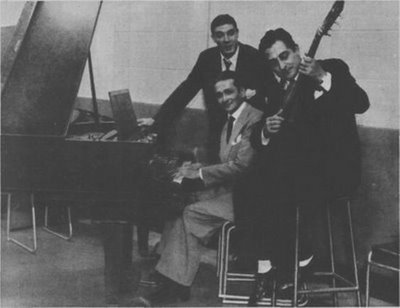
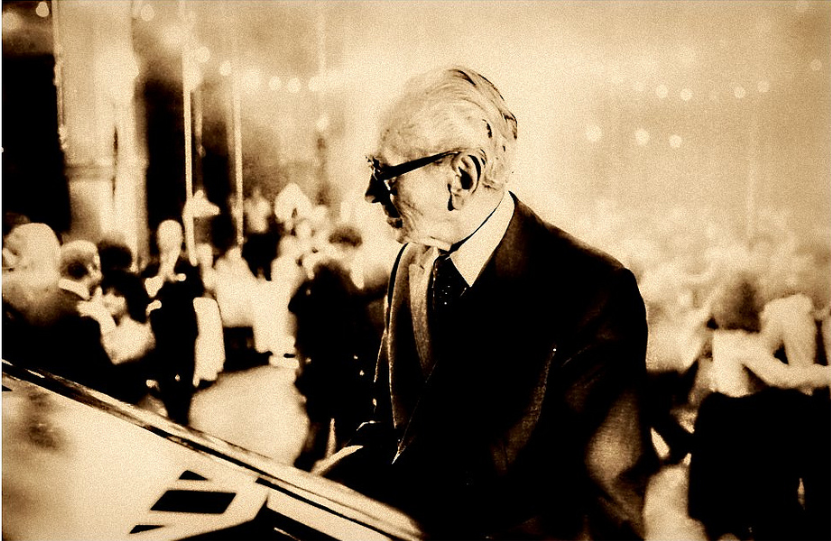
 Here is a collection of Osvaldo Pugliese tandas. My favorite tandas are highlighted.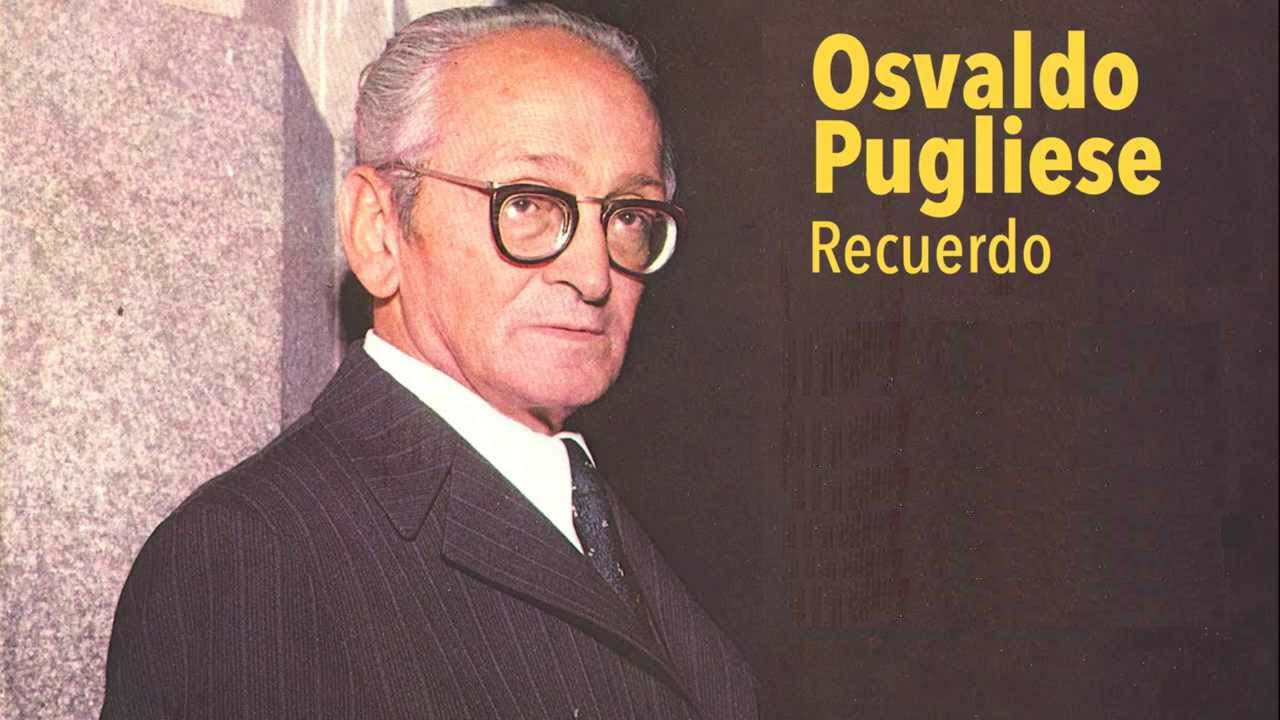
 Pugliese was outspoken in his political opinions and was a communist. These sympathies often brought him into conflict with the government and police. His orchestra was banned from being played on the radio on several occasions. In 1955, Perón had him jailed for six months. He was also jailed by the previous government and later governments. Whenever he was arrested his band would place a red carnation or rose on his piano as a "symbol of absence (símbolo de ausencia)." He was threatened many times during the dark days of the Proceso (1976 to 1983) but as Juan Carlos Copes explains, "he was simply too popular" to "disappear."