Most of the best dances of my life have been to Pugliese.
To dance to Pugliese, you need exceptional balance, patience and discipline (by both partners). It takes the ability to respect the silence and the moments between the steps. To dance Pugliese is to dance tango.. not to execute steps. Pugliese takes time to master. Don't be afraid of him though.. find freedom in those pauses. The big problem I think for most with Pugliese is that it requires a perfect mixture of exceptional technique and heart. One without the other will not suffice...
Pugliese is considered, by most accomplished dancers, to be a wonderful orchestra for dancing. You will hear plenty of Pugliese at the Milongas in Buenos Aires and you will see the best dancers head to the floor when they hear the first notes. That is when they find their favorite partners.
Poesía de gotán: The Poetry of the Tango is a great website that has lots of translations of some really great tango songs.
Carmencita dancing milonga in 2000 at 95 Years Old.
To see more videos of her dancing go to my "Favorite Older Milonguero Performances" page.
Canyengue is one of the earliest forms of Tango and was probably the style that was taken over to Paris at the turn of the century. Here is a good demonstration of this style. It is very rhythmic and danced more into the ground than we dance tango today.
The first generation of tango musicians are commonly referred to as "La Guardia Vieja" (The Old Guard). The first Period of "La Guardia Vieja" lasted from approximately 1895 to 1910. These songs are a type of habanera blended with African and European music and are sometimes referred to as "tango-habanera," "tango criollo" or "tango-milonga."
This period saw:
The music originated in the "Rioplatenese" or Río de la Plata region of Argentina and Uruguay. Some of the origins of the music would be candombe, vals criollo, habanera, flamenco, polka, milonga (different from the milonga we know today and was a type of "battle" poetry), mazurka and contradanse. In essence, you had European immigrants with their instruments being influenced heavily by Latin American and African music.
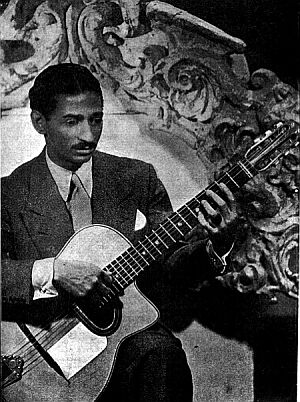
It is true that only about 8,000 black argentines existed out of a population of over 400,000 in 1887, but all it took was a few to have a great impact on tango. The best example of this was Leopoldo Ruperto Thompson. Get this, he was a bass player who played with Firpo, Canaro, Arolas, de Caro and Cobián. Many of the first bandoneon players and guitarists were black. Also, some of the earliest composers of tango including Mendizábal and Carlos Posadas, as well as many of the earliest dancers and teachers.
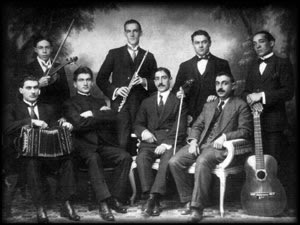
At this time Tango was played by solo guitar or piano, small ensembles (conjuntos) and municipal marching bands. The ensembles were usually trios and would often consist of some combination of flute, clarinet, guitar and/or violin. The guitar would often play the habanera rhythm while the flute, clarinet and/or vilolin played the melody. Sometimes, these groups would be accompanied by male or female singers. They would play in cafés, beer houses, courtyards of conventillos (poor apartment houses) and also in brothels. The music would also have been played around the city by organitos or organ-grinders who went around the city playing portable player-organs.
Towards the end of this period we also saw the signature instrument of tango, the bandoneon, introduced to the ensembles. The bandoneon was a concertina type of instrument created in Germany for churches that could not afford an expensive organ. It made its way over to Argentina and Uruguay with the huge influx of immigrants.
![]() |
![]() |
During this time, tango begins to take on structure. In 1897, Anselmo Rosendo Menizábal composed, "El entrerriano (The Man from Between the Rivers)" which was the first tango structured in three distinct sections. The 1st and 3rd sections had 16 measures and the 2nd measure had thirty-two measures.
In the early 1900s, many academias and cabarets began to open around the city. Academias were places were people could learn the choreography of tango and other dances. Cabarets were public places where people could dance and play tango. Armenonville, at the corner of Avenida Alvear y Table, was one of the first of these places. Other establishments were also opening and promoting tango like Hansens which was a restaurant/café on Avenida Sarmientos. The picture on the left was taken in March of 1905 at a carnival at the Pabellón de las Rosas (Rose Pavillion), a popular dance venue in Buenos Aires.
This period also saw men dancing with other men. The primary reasons for this was that men greatly outnumbered women and so the women had their pick of the men to dance with. So, the men would get together and practice and learn from one another in order to improve so that the could attract the few women dancers. This was a time when women and men could not associate as easily as today.
.jpg)
Many early pioneers of rioplatense tango travelled to Europe including Angel Villoldo, Alfredo Gobbi, and his wife, Flora Hortensia Rodriguez to record ind France and Germany. Below are some of the earliest recordings of tango. These recordings are from vinyl LPs and 78s. I am working on getting them all recorded and posting as much historical information about them as possible.
Between 1906 and 1910, 850,000 immigrants arrived in Buenos Aires and the population grew to 1,500,000, setting the stage for the next period of tango's growth.
Special thanks to Allan Ditzel for helping with translations. Some of the content below and much more can be found on the Antología del tango rioplatense. Vol. 1 by the Instituto Nacional de Musicología "Carlos Vega."
“La Morocha” (?)
Composer: Enrique Saborido
Performed by: Recording of an orginal Barrel Organ (Organito)
The original sheet music describes the song as "tango criollo." There is some debate about whether or not this or "el choclo" was the first tango to be exported to Europe. Saborido travelled to Paris and was there in 1911 teaching people how to play and dance tango. Of course, this version is an instrumental, but Angel Villoldo did add lyrics to the song.
More on Enrique Saborido: http://www.todotango.com/spanish/creadores/esaborido.asp
More on "La Morocha:" http://www.todotango.com/english/biblioteca/CRONICAS/leyenda_morocha.asp?idc=327
"El Sargento Cabral" (1907)
Composer: Manuel O. Campoamor
Performed by: Banda de la Guardia Republicana de Paris
The pianist and composer Manuel O. Campoamor numbered all his tangos and "El Sargento Cabral", dating from 1898 or 1899 is number 1.
Campoamor was born on November 7, 1877 in Montevideo, Uruguay, but he grew up in Buenos Aires, Argentina. He learned to play the piano by ear and never learned to write music. He composed tangos from 1898 to 1905 and kept playing piano publicly until 1922, but according to his wife he would still play at home every day until his death in 1941 of Lung Cancer. He is quoted as saying, "I didn't compose any more and don't even think of doing it; I neither have the enthusiasm nor the time to devote to that. Today the output is overwhelming and the number of composers is great. The present generation has adopted a different beat for tango, which is warmly welcome by the public; we, those who feel tango in quite a different way, have to withdraw to allow the new trends to express this new sensitivity."
"El Sargento Cabral" was published in 1899 by Gath & Chaves house where Campoamor worked for 25 years, eventually becoming manager.
It was edited by J. A. Medina e Hijo and it as dedicated to the composer Leopoldo Corretjer. According to the author, this work owes its title to a common occurrence in local dance spots of the time. Following a competition someone from the winning side would exclaim, "We have beat the enemy!" in parody of what Sargent Cabral said shortly before his own death in the battle of San Lorenzo.
The recording of Paris' Republican Band belongs to a series of recordings made specifically for the recording house, Gath & Chaves. They sent several pioneers of rioplatense tango to Europe including Angel Villoldo, Alfredo Gobbi, and his wife, Flora Hortensia Rodriguez to record because there was no recording studio in Buenos Aires.
Campoamor also worked as a pianist in the famous house of Maria "La Vasca" which can still be found at the corner of Carlos Calvo Street and Jujuy Street.
For more information on Campoamor visit: http://www.todotango.com/english/crea...
"Mordeme la oreja izquierda" (Bite my left ear) (1908)
Composer: Eugenio M. de Alarcon
Performed by Banda Española
This edition of the tango dates from 1906 and belongs to the composer himself, who dedicated it "Al amigo Cesar H. Colombo" (To the friend Cesar H. Colombo). It has the odd subtitle "Canto de dos ruiseñores" (A song of two nightingales) and the classification of "tango criollo." A footnote on the cover warns that any sample that does not have the author's signature should be considered a falsification.
Alarcon, director of the national theater orchestra, enjoyed using many italianisms when indicating how to express the music; on this piece one can see words such as "expressivo", "legatissmo", "scelti", "ben ritmato", etc.
For more information: http://www.todotango.com/english/Las_...
"El Club Z" (1908)
Composer: Anselmo Rosendo Mendizabal
Performed by: Orquesta del Teatro Apolo Dir: Enrique Cheli
The "Z Club" was composed of a group of revelers headed by Esteban Banza and J. Guidobono. This was an exclusive group formed by forty individuals with the sole purpose of organizing a monthly dance for its members. This group existed from the end of the nineteenth century to the first decade of the twentieth century. The dances were generally held in the house of Maria La Vasca, and it was rented for the entire night for 3 pesos per hour per person. The Afro-Argentine pianist and composer Mendizabal was the usual musician, both as a soloist as well as when he played with his band, which was composed of two violins, a flute, a piano and two guitars. Mendizabal composed many tangos including "El Club Z" where an instrumental call and response surmounts a habanera accompaniment.
Due to prejudices of the time, Mendizabal signed his tangos with the pseudonym "A. Rosendo". The original score included in this anthology is edited by the author by the musical press Ortelli Hnos. Has the dedication, "A los distinguidos socios del Z Club" (To the distinguished members of the Z Club).
For more information: http://www.todotango.com/english/crea...
“El Pechador” (1909)
Composed by: Angel Gregorio Villoldo
Performed by: Linda Thelma (canto) y Arturo de Siano (piano)
Edited by the house David Poggi e Hijo, it was dedicated by Villoldo “Al celebrado autor nacional don Nemesio Trejo” (to the celebrated national author Mr. Nemesio Trejo), who was the singer and author of comic sketches (1862-1916); it was a popular tango in its time and it was also recorded by Alfredo Gobbi.
Like most, if not all, of Villoldo’s lyrics they are written in the first person and exalt the virtues of the compadrito. Although it may seem inappropriate this title is sung by a woman, the singer Linda Thelma, who has deep roots in Spanish tiples [I have no idea what this is]. She was accompanied on many an occasion by Villoldo himself while recording. Arturo de Siano, a musician who plays with Linda Thelma in this version, was a prominent musician in the theater.
More info on Angel Gregorio Villoldo: http://www.todotango.com/english/creadores/avilloldo.html
More info on Linda Thelma: http://www.todotango.com/english/creadores/lthelma.asp
“El Purrete (The Kid)” (1909)
Composed by: Jose Luis Roncallo
Performed by: Banda de la Policía de Beunos Aires Dir: Mtro. A Rivara
Basically, all bands incorporated tangos into their repertoires during the first two decades of the century. You can hear the habanera being heavily dramatized as the cymbals clash during the song. These types of bands reached their peak during these years as is demonstrated by the elevated number of recordings made. Some of the most well-known ones include: the 1st Infantry Regiment, the 5th Infantry regiment, the Atlanta, and the Buenos Aires Police.
“El Purrete”, edited by Breyer Hnos. and dedicated to “El Senor Eduardo Oliveri” (Mr. Eduardo Oliveri) was the first tango written by this author. His style was methodical and consistent with a musician trained in a conservatory. According to unverified claims, the song dates from 1901 and the score dates from some time after, 1903 to 1904.
“La Bicicleta” (1909)
Composer: Angel Gregorio Villoldo
Performed by: Angel Villoldo (canto y castañuelas) y Manuel O. Campoamor (piano)
The primitive form of singable rioplatense tango suffered great influences from Spanish zarzuela tango. This is very clearly detectable in the version of “La bicicleta” by Angel G. Villoldo. It has a piano accompaniment by Manuel O. Campoamor purely for melodic purposes as well as castanets played by Villoldo.
Cycling and pelota vasca were the favorite sports during 1895 and 1910, where one could find extensive bicycle caravans traveling to be exhibited in the forests of Palmero after first riding in the city center.
According to Robert Farris Thompson, "Villoldo's 'La bicicleta' (The Bicycle) of 1909 began, nobly, to mix cultures. From the famus black payador Gabino Ezeiza, Villoldo borrows jump-cuts from singing to speech. He hits certain words, like damas and ramas, with flamencolike trills, Arabized melismas that add savor to rhyme. And while he's singing, Villoldo plays castanets!"
More info on Villoldo: http://www.todotango.com/english/creadores/avilloldo.html
More info on Campoamor: http://www.todotango.com/english/crea...
“El Porteñito” (1909)
Composer: Angel Gregorio Villoldo
Performed by: Andrée Vivianne (canto) y orquesta
More info on Villoldo: http://www.todotango.com/english/creadores/avilloldo.html
“Gran Hotel Victoria” (1910)
Composer: Feliciano Latasa
Performed by: Estudiantina Centenario (trio de bandurrias y guitarra) Dir: Vicente Abad
For more information: http://www.todotango.com/english/biblioteca/cronicas/leyenda_Hotel_Victoria.asp
"Joaquina" (1911)
Composer: Juan Bergamino
Performed by: Manuel O. Campoamor (solo piano)
Below are articles on some of the most famous Tango orchestras including biographies, videos and their most popular songs:
"La Guardia Nueva" (The New Guard) period lasted from approximately 1925 to 1935. The new musicians developing during this period would be known as "The 1925 Generation."
This period saw:
In the late 20s and early 30s, more classically trained musicians began to join and form orchestras and were influencing the largely self-taught musicians of the previous generation. Some of the older generation would say things such as "They have turned tango into church music," because they were working more with melody and harmony than rhythm.
The most famous of these was the violinist Julio de Caro who put together an orchestra which included the bandoneonista Pedro Laurenz. He still retained an element of tango's street beginnings, but with more elegance and complex structure. He also slowed tango down even more. This new style combined with Tango Cancíon and the popularity of records meant that a larger "listening" audience was growing rather than a "dancing" audience. Orchestras no longer had to depend on dancers to pay the bills and began creating music that was not popular with dancers and tango as a dance sharply declined.
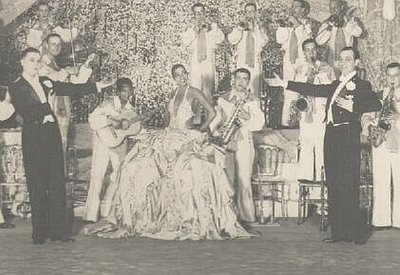
With the advent of silent films, the best tango musicians were sought after to play for the movies. For less popular films, one pianist would do, but for more popular films sometimes a trio, quartet or a sexteto típico would be employed.
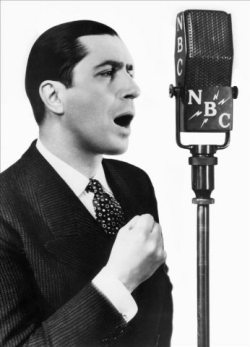
Tangos were also a popular subject for films and the tango stars of the day, including Gardel, often starred or made appearances in them.
Tango orchestras were also very much in demand for the new medium of radio and would often play live and have their own weekly shows.
In the 1910s, as orchestras became more in demand to play large dances and festivals, their sizes ballooned to more than 1 dozen musicians. For a festival in 1921, Francisco Canaro presented an orchestra of 12 bandoneons, 12 violins, 2 cellos, 2 double-basses, 2 pianos, 1 flute and 1 clarinet. By the mid-1920s, the popularity of the microphone had made it so that most orchestras took the form of sextetos típicos.
The second part of the Guardia Vieja period lasted from approximately 1910 to 1935. I say approximately because the styles and changes of this period blended very smoothly with the preceding and following periods. It is not as if on January 1, 1910 people started composing and playing differently.
This period saw:
Up until the early 1910s, tango had largely been a past time of the lower classes. It had been played and danced in cafés, bordellos, restaurants, conventillos but not in the salons of the elite. After Tangomania swept Europe and the US, this all changed and tango began to be embraced by the middle and upper classes of Buenos Aires. It is impossible to understate the popularity of Tango in Europe. It was the rage of the salons and made headlines in newspapers.
Enrique Saborido, the composer of many tangos including "La Morocha," also travelled to Europe to teach people how to properly play tango and ended up also teaching people to dance:
"The marquise Reské, widow of the famous tenor Jean Reské, was willing to popularize Argentine tango among the French. It was around 1911 and I accepted such formal invitation; when in Paris, at the beginning I devoted to teaching tango playing, so that it would be correctly performed. As I had spare time and I had noticed that the high society people were really interested in it, I taught them how to dance it.
One night at the marquise palace where a reception was held I organized, with the approval of the attendance, a pericón (traditional Argentine dance) whose steps proved to be very attractive for everybody and were warmly applauded.
On another occasion I was appointed referee to demonstrate that the forlana was not more decent than tango; the dissent was even reflected in the chronicles at the papers and the Catholic paper "Le Gaulois" finally regarded tango as a beautiful graceful dance.
Thereafter the outbreak of war forced me to come back to Buenos Aires."
It is also impossible to understate the influence that Europe's acceptance, particularly France's, had on Buenos Aires. It is joked that, porteños were Italians that spoke Spanish, thought they were British and wished they were French. Anyone who visits Buenos Aires cannot deny the influence of French architecture.
In 1911, Vincente Greco was asked to record some tangos by Columbia and he created the first Orchesta Típica Criolla. Over time the "criolla" was dropped from the name. The original Orchesta Típicas were sextets which consisted of two bandoneons, two violins, a double bass and a piano (sometimes a guitar or flute were substituted). Eventually they grew to include a string section (with violins, viola, and cello), a bandoneón section (with 3 or more bandoneons), and a rhythmic section (with piano and double bass).
Around 1916, Firpo re-wrote a march by Gerardo Mattos Rodriguez as a tango. It would become the most famous of all tangos, "La Cumparsita."
Up to this point, tango lyrics had been dark, but humorous. In 1917, Carlos Gardel recorded Pascual Contursi's "Mi Noche Triste." Now Contursi could have meant the lyrics to be ironic but Gardel sang the song with melodramatic longing and sadness. This song struck a cord with the newly arrived immigrants, who were missing their countries, families and wives and was hugely successful, launching a new genre "tango-canción." Tango-canción was full of drama, sentimentality, sadness and nostalgia.
During this period, the habanera influence began to fade and the tempo of the music slowed down. In "Tango: The Art History of Love," tango guitarist Ubaldo de Lío says, "The earliest form of tango was a type of habanera. The tango-milonga then followed. After that came 'the four,' four quarter-notes per measure. We still ask ourselves who invented 'the four.' Some say Canaro, others say Firpo, a few claim de Caro." "The four" consists of 4 equal quarter notes (beats) with 2 strong beats (down beats) and 2 weak beats (up beats). In dancing, we usually step on beats 1 and 3 (the down beats) and not 2 and 4 (the up beats) unless we using traspíe or double-timing.
From Robert Farris Thompson's "Tango: The Art History of Love:"
"The four" arrived in force in the 1920s, with Firpo, Canaro, and de Caro. Important changes in harmony and phrasing came with it: polyphony and counterpoint emerged with de Caro. Tango was in a state of creative ferment. Black swing and black imporvisatin met innovations evolving within the Western-oriented tradition. The black composer Mendizábal, we recall, had designed the early structure of tango, involving a first and third part of sixteen bars each with a bridge of thirty-two bars in between. Now de Caro and his peers swept this away: 'After 1925 nobody writes [tangos] in three parts any more; sometimes introductions, bridge passages, and codas are added.' The trend was now to structure in two parts, doubled in execution: A B A B.
This is important for dancers because it means that most tangos are fairly predictable. Sometimes I will dance with someone to a song, that I have never heard before, and at the end she says, "you must really know that song well." Actually, I just paid attention to the first part of the song and listened to the structure and therefore knew what to expect in the second part of the song.
Paquita Bernardo was the first professional female bandoneon player and Carlos Gardel said she was, "the only woman who has mastered the macho character of the bandoneon." The debuted her sextet in 1921. There were many women's orchestras and they were popular between 1920 and into the early 1930s. They often played in confiterías, cafés, bars, for weddings and parties. To the best of my knowledge, no women's orchestra was ever recorded.

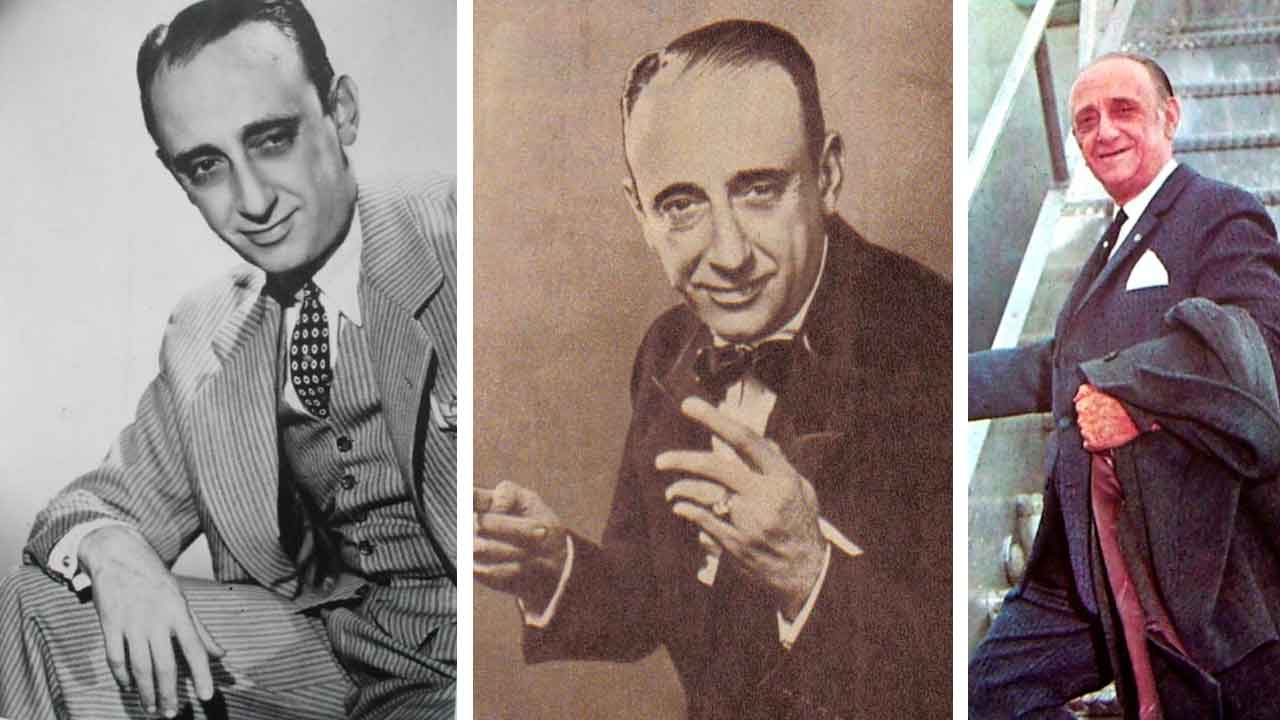
Osvaldo Pedro Pugliese (Buenos Aires, December 2, 1905 – July 25, 1995) was an orchestra leader, composer and pianist.
He was known for his dramatic and passionate arrangements while still keeping the strong walking beat of salon tango. His music walked a fine line between the dance hall and concert hall. The greatest musicians of the time wanted to work with Pugliese.
One could speak, with total justice, of compositions before and after Pugliese's "Recuerdo" and the instrumentalists before and after "Recuerdo." - Horacio Ferrer
He composed his first tango "Recuerdo" in 1924 when he was only 19 years old. The title was originally "Recuerdo para mis amigos" (Memory for my friends) and was an homage to his friends that he used to hang out with in the cafe. This song is often described as a milestone of tango composition for its melodic structure and its complex density. "Recuerdo" shows Pugliese's knowledge of European classical music and his commitment to the streets of Buenos Aires, as de Caro had previously. It is no wonder that de Caro was the first orchestra to record the song.
Pugliese is often played later in the evening when the dancers want to dance more slowly, impressionistically and intimately. While being able to dance well to Pugliese's music is the mark of a truly accomplished dancer, his music is very challenging for new dancers.
Pugliese was outspoken in his political opinions and was a communist. These sympathies often brought him into conflict with the government and police. His orchestra was banned from being played on the radio on several occasions. In 1955, Perón had him jailed for six months. He was also jailed by the previous government and later governments. Whenever he was arrested his band would place a red carnation or rose on his piano as a "symbol of absence (símbolo de ausencia)." He was threatened many times during the dark days of the Proceso (1976 to 1983) but as Juan Carlos Copes explains, "he was simply too popular" to "disappear."
During the Golden Age, many dancers would follow their favorite orchestras around like soccer fans of today. No fans were more dedicated than Pugliese's, some of whom would copy his haircut, glasses and suits. For some reason, some would wear band-aids forming a cross on their right cheeks. The women who followed Pugliese often wore Shanghai inspired dressed with slits cut on both sides along with anklets and high heels.
"La Yumba" was another of Pugliese's major hits. It was recorded in 1946 and showed his respect for the early black musicians of tango. As mentioned before, Pugliese took tango to a new level but did not discard its roots in the streets of BA. He stated once that he was inspired to write "La Yumba" by a young black pianist, "I kept my ears open. I remember, around 1930, a young black pianist who used to hang with us. He played by ear in tango dance halls. He was marvelous. We loved this black guy. Me and him used to play, four hands on a keyboard. In Ki-Kongo, where many of the blacks of BA came from, yumba meant "to dance!" Candombe musicians and artists would yell "Oyeye yumba!" (Sing it! Dance it!).
Live Perfomances:
Popular Songs:
Learn more about Osvaldo Pugliese: